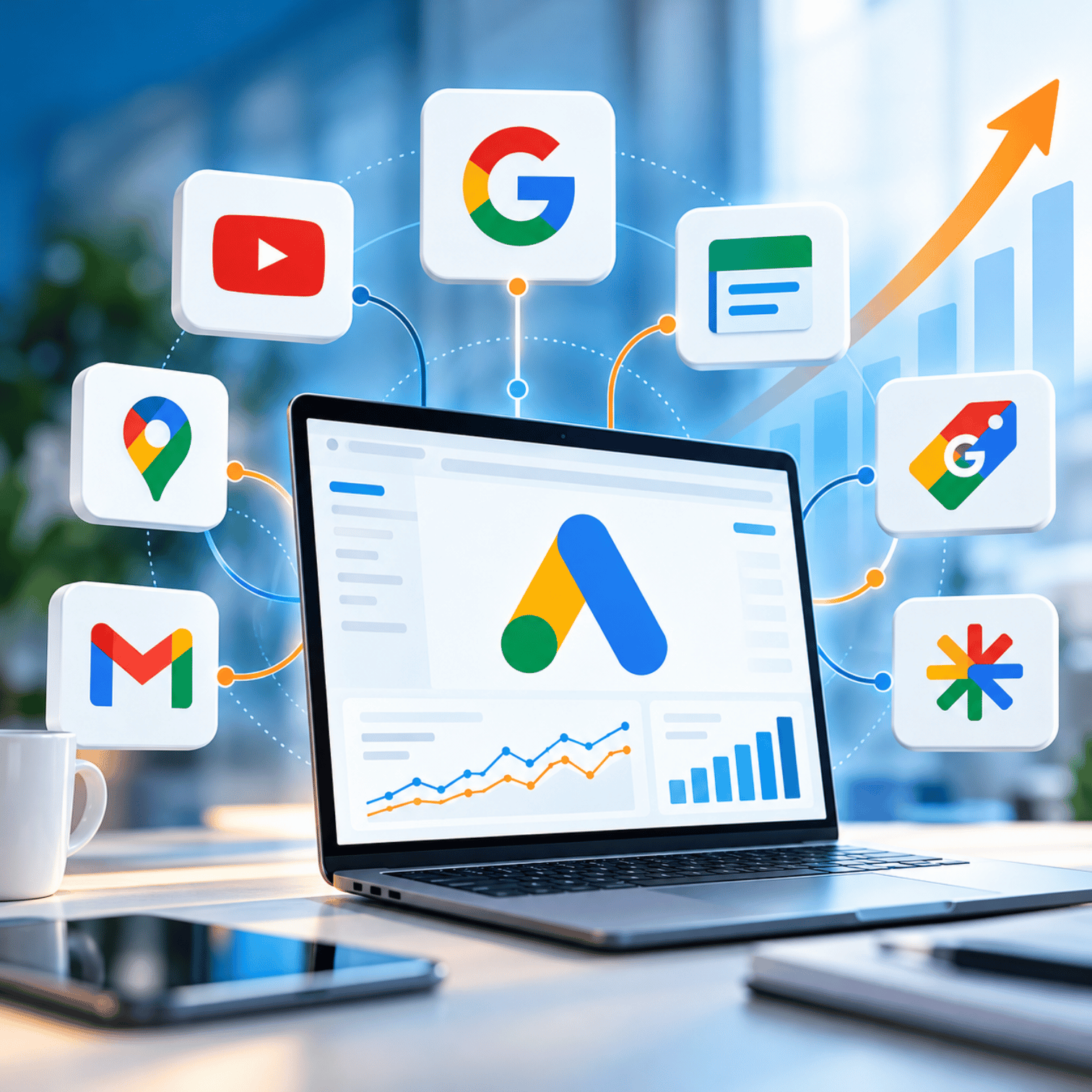
Google Ads has changed considerably over the years, and Performance Max Campaigns are one of the biggest shifts in how advertisers manage their campaigns. Instead of choosing specific keywords and placements for every ad, advertisers give Google more freedom to decide where ads appear and which audiences are most likely to convert.
For businesses, this creates some interesting opportunities, along with a few challenges worth understanding before investing your advertising budget.
Performance Max can help you reach potential customers across multiple Google platforms. However, the results depend heavily on how the campaign is set up, what you’re asking Google to optimize for, and how carefully you monitor performance.
Here’s what businesses should understand about Performance Max before deciding if it belongs in their Google Ads strategy.
What Are Performance Max Campaigns
Performance Max is a Google Ads campaign type that allows advertisers to run ads across multiple Google channels through a single campaign. It uses Google’s artificial intelligence and automated bidding systems to determine when, where, and to whom ads should appear.
Performance Max Campaign: A goal-based Google Ads campaign that uses automation to manage bidding, ad delivery, and creative combinations across Google’s advertising inventory.
Unlike traditional Search campaigns, which rely primarily on keywords selected by the advertiser, Performance Max uses conversion data, audience signals, creative assets, and other information to identify potential customers.
Google designed Performance Max to complement existing Search campaigns, although it can also operate independently depending on your advertising objectives.
How Do Performance Max Campaigns Work?
When setting up a Performance Max campaign, you provide Google with information about your business, the customers you want to reach, and the actions you want people to take.
This includes your advertising budget, conversion goals, headlines, descriptions, images, videos, and audience signals. Ecommerce businesses can also connect their product feeds through Google Merchant Center.
Google uses this information, along with its own data, to determine which combinations of ads and placements are most likely to achieve your campaign goals.
Where Performance Max Ads Can Appear
One of the main differences between Performance Max and standard Search campaigns is the number of advertising channels available. Performance Max ads can appear across:
-
Google Search: Ads shown alongside relevant search results.
-
YouTube: Video and other eligible ad formats reaching YouTube users.
-
Google Display Network: Ads displayed across participating websites and apps.
-
Google Discover: Ads appearing in personalized content feeds.
-
Gmail: Ads within eligible Gmail placements.
-
Google Maps: Ads reaching people looking for businesses, products, or services.
-
Google Shopping: Product ads for eligible retailers using Merchant Center.
This gives advertisers access to audiences at different stages of the buying process without having to build separate campaigns for each channel. It also means your advertising dollars may be spent on placements you wouldn’t have selected yourself.
Reviewing channel performance is particularly useful for understanding where your budget is going.
How Much Control Do Advertisers Have?
Performance Max originally received criticism for giving advertisers limited insight into where ads appeared and what was driving conversions.
Google has since introduced additional reporting and campaign controls, including search themes, negative keywords, brand exclusions, and expanded asset performance reporting.
Search themes are phrases advertisers provide to help Google identify relevant customer searches. They aren’t the same as traditional keywords because Google can still show ads for searches outside those themes.
Advertisers can currently add up to 50 search themes per asset group.
These controls give businesses more ways to influence campaign performance, although Performance Max still operates with considerably more automation than a traditional Search campaign.
Is Performance Max Better Than Google Search Campaigns?
Performance Max isn’t necessarily better than Search. The two campaign types approach advertising differently, and each has advantages depending on what your business is trying to accomplish.
A standard Search campaign allows you to select keywords associated with your products or services. For example, an HVAC company might advertise for searches such as “emergency furnace repair” or “air conditioner installation.” These searches indicate that someone is actively looking for a particular service.
Performance Max takes a broader approach. It can reach people through Search, but it can also introduce your business to potential customers on YouTube, Display, Discover, and other Google properties. For businesses focused on generating service inquiries, Search often makes sense as a starting point because it provides more direct control over search intent.
Performance Max may be worth testing once you have reliable conversion tracking and want to explore additional opportunities.
The two can also work together. Google has specific rules for determining which campaign serves an ad when Search and Performance Max are both eligible, so advertisers should review performance across the entire account rather than treating each campaign in isolation.

When Should a Business Use Performance Max?
Performance Max is worth considering when you have a clear advertising goal, dependable conversion data, and the ability to evaluate the quality of the results. For example, an ecommerce business with a well-maintained product feed and accurate purchase tracking may benefit from allowing Google to promote products across several channels.
A service business may also see positive results, particularly when it can provide Google with information about which inquiries turn into qualified leads or customers. Before launching, consider if you have the following in place:
-
Accurate conversion tracking for important website actions.
-
A clear understanding of what a qualified lead or sale is worth.
-
Landing pages that match the products or services being advertised.
-
Quality images, videos, headlines, and descriptions.
-
Enough advertising budget to collect useful performance data.
When Performance Max Might Not Be the Right Fit
There are situations where we’d recommend improving an existing Search campaign before adding Performance Max.
If your conversion tracking counts every phone call as a lead, including wrong numbers and unrelated inquiries, Google may end up optimizing toward actions that provide little business value.
Businesses that need tight control over specific keywords or search intent may also prefer Search campaigns.
Budget matters as well. If your advertising budget is limited and your highest-value keywords aren’t receiving enough exposure, spreading that budget across additional channels may not be the best use of your resources.
The decision should come down to your business goals and the information available to guide the campaign.
Why Conversion Tracking Matters So Much
Conversion tracking is essential for getting useful results from Performance Max because Google relies on that information to make advertising decisions. Consider a plumbing company running ads for water heater replacement. During one month, the campaign generates 40 form submissions at an average cost of $30 each.
At first glance, the $30 cost per lead looks promising. But what if only eight of those inquiries are legitimate requests for plumbing services?
The business actually spent $1,200 to generate eight qualified leads, making its cost per qualified lead $150 which paints a much different picture.
This is a hypothetical example, but it illustrates why reported conversions don’t always reflect actual business results.

Tracking Qualified Leads Instead of Every Form Submission
For businesses that generate leads, one of the most useful improvements is connecting Google Ads with information about what happens after someone contacts the company. Google’s enhanced conversions for leads can use first-party customer information and imported offline conversion data to improve measurement.
For example, a business might track when an inquiry becomes a qualified opportunity, a scheduled appointment, or a completed sale. This gives Google’s bidding system better information than simply knowing someone submitted a contact form.
It also helps business owners evaluate if advertising is producing leads that their sales team can actually convert.
Can You Control Negative Keywords and Brand Searches in Performance Max?
Yes. Google now allows advertisers to add campaign-level negative keywords to Performance Max, helping prevent ads from appearing for unwanted searches on applicable Search and Shopping inventory.
For a business selling premium products, negative keywords might help reduce traffic from searches containing terms such as “free” or “used,” depending on the products being advertised.
Brand exclusions provide another useful control. Suppose someone searches directly for your business name. That person may already know your company and be ready to contact you. If Performance Max captures that conversion, it receives credit even though the customer was already looking for your business.
This doesn’t mean branded conversions have no value. It means advertisers should understand how much of their campaign performance comes from people already familiar with the company.
You should also review Final URL expansion settings, which can allow Google to direct visitors to different pages on your website.
For businesses with dedicated service landing pages, it’s worth checking that paid traffic is reaching pages appropriate for the services being advertised.
How Long Does Performance Max Take to Work?
Performance Max needs time to gather data and adjust its bidding decisions. Google generally recommends allowing at least six weeks to evaluate a new campaign, although actual performance depends on conversion volume, budget, and other factors.
During that period, Google’s automated systems are learning which combinations of audiences, placements, and creative assets are producing results.
That doesn’t mean you should leave the campaign unattended for six weeks. Conversion tracking should be checked immediately, and advertisers should continue reviewing spending, traffic quality, and obvious problems.
What you want to avoid is making major changes every few days because the campaign hasn’t produced the results you expected.
How to Measure If Performance Max Is Actually Working
The number of conversions reported inside Google Ads is a starting point, but it shouldn’t be your only measure of success. For ecommerce businesses, revenue and return on ad spend may be the most useful metrics. For service businesses, qualified leads, booked appointments, and acquired customers often tell a more complete story.
We recommend reviewing campaign performance alongside actual business activity. Are sales increasing? Are incoming calls relevant? Are the leads coming from areas your business serves? Are customers requesting the products or services you’re trying to promote?
You should also review search-term insights, asset performance, landing pages, and channel reporting to better understand how the campaign is spending your budget.
Are Performance Max Campaigns Generating New Business?
Another consideration is if Performance Max is helping you reach new customers or primarily capturing people who were already likely to contact your business.
For example, if you introduce Performance Max and your overall Google Ads conversions remain relatively unchanged, an increase in conversions attributed to PMax may simply reflect a shift between campaigns.
That doesn’t automatically mean the campaign is ineffective. It does mean you need to look beyond its individual performance report.
Google offers Performance Max experiments that help advertisers measure incremental conversions or conversion value when adding PMax to existing campaigns.
These experiments can provide stronger evidence of if the campaign is contributing additional results.
Should You Add Performance Max to Your Google Ads Strategy?
Performance Max has become a useful option for businesses looking to reach customers across multiple Google advertising channels. Recent improvements to reporting and campaign controls have also made it easier to evaluate how those campaigns perform.
Still, it’s not the right choice for every advertiser.
If your Search campaigns are already producing qualified leads at a reasonable cost, Performance Max may provide another opportunity to grow. If you’re struggling with conversion tracking, irrelevant traffic, or poor lead quality, those problems deserve attention first.
At Point of Action Marketing, we evaluate Performance Max Campaigns in the context of your entire Google Ads account. That includes understanding which services or products you’re promoting, where your best customers come from, how much you’re spending, and if the results support your business goals.
Want to know if Performance Max makes sense for your business? Contact Point of Action Marketing to discuss your Google Ads strategy.